
Missing teeth can affect far more than your appearance. Everyday activities like eating your favorite foods, speaking clearly, and smiling with confidence may become challenging when teeth are lost. Fortunately, modern dentures offer a reliable and effective solution for restoring both oral function and aesthetics, helping patients regain comfort and confidence in their daily lives.
If you’re considering dentures, one of the first decisions you’ll need to make is whether complete dentures or partial dentures are the best fit for your needs. The right option depends on several factors, including the number of teeth you have remaining, the health of your gums and jawbone, and your long-term oral health goals.
What Are Dentures and How Do They Help?
Dentures are custom-made dental appliances designed to replace missing teeth and restore normal oral function. They are carefully crafted to resemble natural teeth and gums, allowing patients to chew, speak, and smile more comfortably.
Thanks to advancements in dental technology, today’s dentures are more natural-looking, comfortable, and durable than ever before. Each denture is customized to fit the unique shape of your mouth, helping provide a secure fit and a realistic appearance.
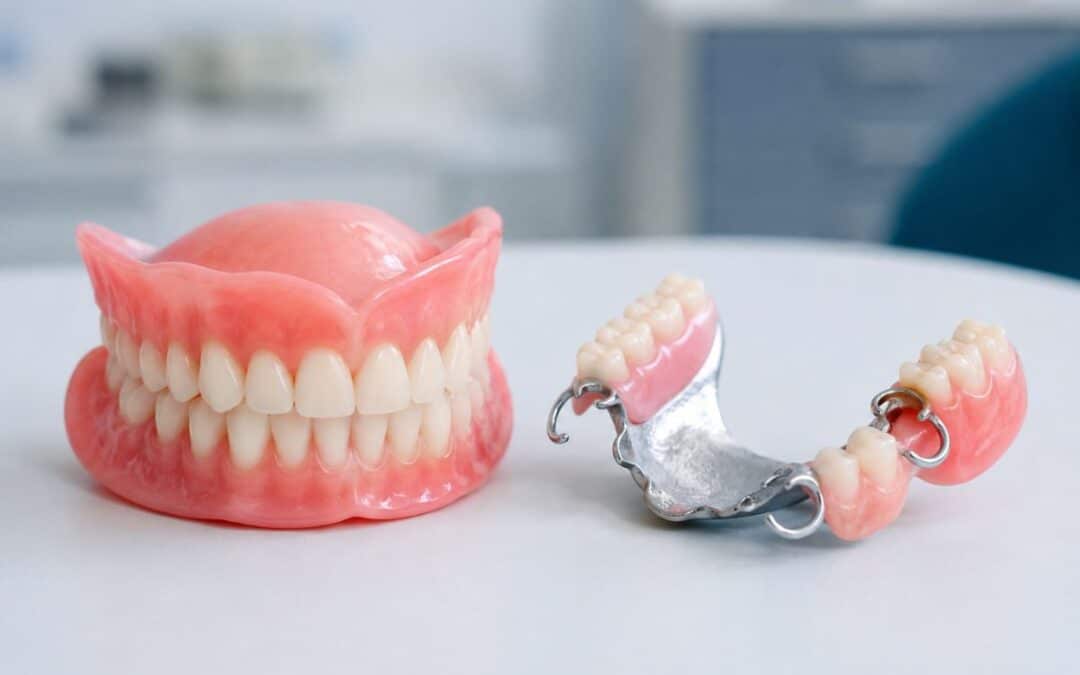
There are two primary types of dentures:
- Complete Dentures – Replace all teeth in the upper jaw, lower jaw, or both.
- Partial Dentures – Replace several missing teeth while preserving the healthy natural teeth that remain.
Understanding the differences between these options can help you make a more informed decision about your dental care.
Complete Dentures: Replacing an Entire Arch of Teeth
Complete dentures are recommended when all natural teeth in the upper or lower arch are missing or need to be removed. There are two main types of complete dentures:
Conventional Complete Dentures
With conventional dentures, any remaining teeth are extracted first, and the gum tissues are allowed to heal completely before the dentures are fabricated and placed. The healing process may take several months, during which the patient may be without teeth.
Immediate Complete Dentures
Immediate dentures are created before tooth extraction and placed immediately after the teeth are removed. This approach allows patients to maintain their appearance and oral function during the healing period. However, adjustments or relining may be necessary as the gums and jawbone change shape after extraction.
Complete dentures help restore a full smile while improving chewing ability, speech, and facial support.
Benefits of Complete Dentures
Patients who choose complete dentures often enjoy several advantages, including:
- Restoration of a complete smile
- Improved chewing and speaking abilities
- Enhanced facial appearance and support
- Increased confidence in social settings
- A non-surgical solution for extensive tooth loss
- Custom-fit design for improved comfort
Regular dental visits are important to ensure that complete dentures continue to fit properly as the mouth changes over time.
Partial Dentures: Filling in the Gaps
Partial dentures are designed for patients who still have healthy natural teeth remaining. These removable appliances fill the gaps created by missing teeth while utilizing adjacent teeth for support and stability.
Partial dentures are typically secured using clasps or precision attachments that connect to neighboring teeth. By filling empty spaces, they help prevent remaining teeth from shifting out of alignment and maintain proper bite function.
Many patients appreciate partial dentures because they are removable, easy to clean, and adaptable to future dental changes.
Advantages of Partial Dentures
Partial dentures offer several important advantages, including:
- Preservation of healthy natural teeth
- Improved chewing efficiency
- Enhanced smile aesthetics
- Prevention of tooth movement and shifting
- Easy removal for cleaning and maintenance
- Cost-effective tooth replacement option
- Flexible treatment design
Although partial dentures may feel slightly bulky at first, most patients adjust within a few weeks and quickly return to normal daily activities.
Complete vs. Partial Dentures: Understanding the Differences
Choosing between complete and partial dentures becomes easier when you understand how they differ.
Number of Missing Teeth
- Complete Dentures: Used when all teeth in an upper or lower arch are missing.
- Partial Dentures: Recommended when some healthy natural teeth remain.
Support and Stability
- Complete Dentures: Supported by the gums and underlying jawbone.
- Partial Dentures: Gain additional stability from existing natural teeth.
Preservation of Oral Structures
- Complete Dentures: Replace all teeth but require monitoring because the jawbone can gradually change shape over time.
- Partial Dentures: Help preserve remaining teeth and support overall oral health.
Future Flexibility
- Complete Dentures: May require relining or replacement as oral tissues change.
- Partial Dentures: Can often be modified if additional teeth are lost in the future.
Your dentist can evaluate your unique oral health needs and recommend the option that offers the best long-term results.
How to Choose the Right Denture Option
The best denture solution depends on several factors, including:
- The number of natural teeth you still have
- The health of your gums and jawbone
- Your lifestyle and personal preferences
- Your long-term oral health goals
- Your dentist’s professional recommendations
During a consultation, your dentist will assess your oral condition and discuss which treatment option can best restore function, comfort, and appearance.
Caring for Your Dentures
Proper denture care is essential for maintaining comfort, appearance, and longevity.
Follow these simple care tips:
- Clean your dentures daily using a soft-bristled brush and denture cleanser.
- Remove dentures at night to allow your gums to rest.
- Avoid hot water, which can warp denture materials.
- Never attempt to adjust dentures yourself.
- Store dentures in water or a denture-soaking solution when not in use.
- Schedule regular dental checkups to ensure a proper fit and maintain oral health.
Consistent care helps extend the life of your dentures and keeps your mouth healthy.
Bring Back Your Bite and Confidence
Missing teeth don’t have to hold you back from smiling, eating, or speaking comfortably. At Stillwater Dental Associates, we help patients in Stillwater explore the right denture option for their needs.
Whether it’s complete or partial dentures, our team provides personalized guidance, professional fitting, and follow-up care for long-lasting comfort and function. Visit our dental office in Stillwater today to schedule a consultation and take the first step toward a healthy, confident smile.
FAQs About Dentures
1. How long does it take to get dentures?
The timeline depends on the type of denture. Immediate dentures can be placed on the same day as extractions, while conventional dentures typically require several months of healing before placement.
2. Will dentures feel uncomfortable at first?
Some mild discomfort and adjustment are normal during the first few weeks. Most patients adapt quickly as their mouth becomes accustomed to the new appliance.
3. Can I eat normally with dentures?
Yes. It’s best to begin with softer foods and gradually introduce firmer foods as you become comfortable wearing your dentures.
4. How long do dentures last?
With proper care and regular dental visits, dentures can often last between 5 and 10 years before requiring replacement or significant adjustments.
5. Can dentures affect speech?
Some patients notice temporary changes in speech when first wearing dentures. With practice and time, speech typically returns to normal.
6. Are partial dentures removable?
Yes. Partial dentures are designed to be removed for cleaning and maintenance, making them a convenient treatment option.
7. How often should I visit the dentist if I wear dentures?
Routine dental visits every six months are recommended to check the fit of your dentures, monitor oral health, and make any necessary adjustments.