
Choosing the right tooth replacement involves more than improving your appearance. It directly affects your comfort, confidence, oral health, and daily quality of life. As more patients consider restorative dentistry, one question often arises: Should I choose dentures or dental implants? Whether you need to replace a single tooth or rebuild your entire smile, understanding the advantages and limitations of each option helps you make a confident, informed decision.
So, which solution best fits your needs? Let’s break down what matters most so you can decide what fits your lifestyle and goals.
What’s the Difference Between Dentures and Dental Implants?
Dentures and dental implants both replace missing teeth, but they work in very different ways.
Dentures are removable appliances that rest on your gums. They can replace several missing teeth or a full arch. Many patients choose dentures because they offer a non-surgical solution with a lower upfront cost. Modern dentures look natural and restore basic chewing ability.
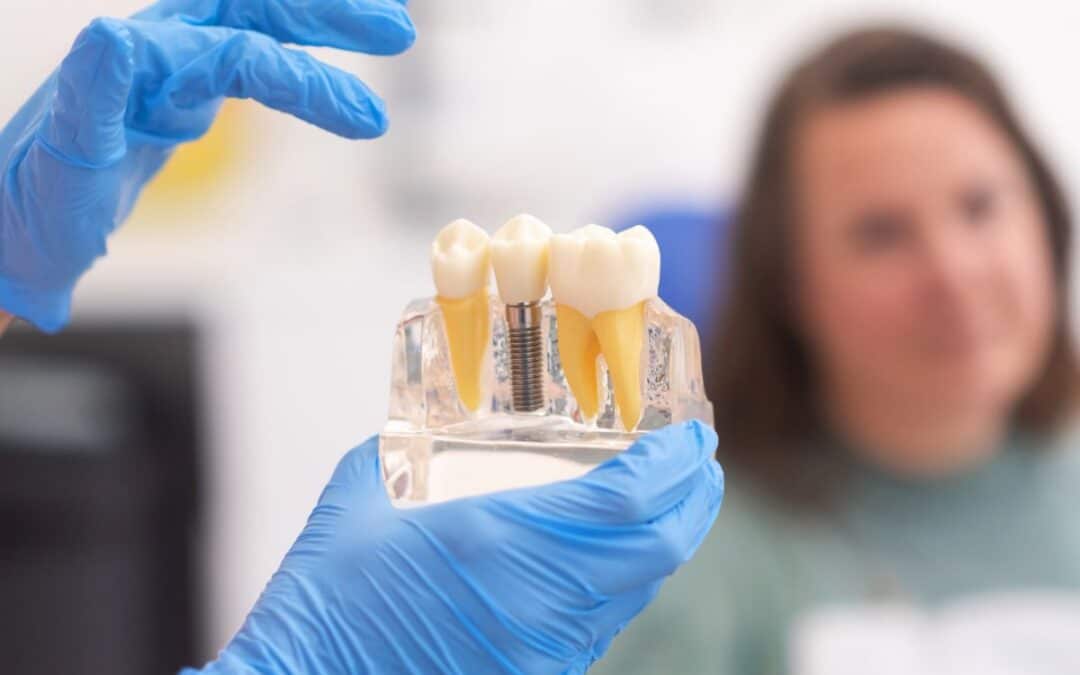
Dental implants provide a permanent solution. A dentist places a small titanium post into the jawbone, where it serves as a replacement for a natural tooth root. After healing, we attach a custom crown or bridge to the implant. Because implants anchor directly into bone, they offer greater stability and strength.
The key difference comes down to stability, bone support, and long-term performance.
Which Option Feels More Like Natural Teeth?
Dental implants feel closest to real teeth. Since they integrate with the jawbone, they stay firmly in place. You can chew confidently, speak clearly, and smile without worrying about shifting. Many patients say implants feel so natural that they forget they have them.
Dentures improve appearance and function, but they rest on the gums. Some patients notice slight movement while eating or talking, especially at first. Adhesives can help, but dentures do not provide the same bite force as implants.
If natural feel and strong chewing power matter most, implants often deliver a better experience.
How Long Do Dentures and Implants Last?
Longevity plays a major role in choosing between these options.
Dentures typically last 5 to 10 years. Over time, the jawbone changes shape, which can affect how dentures fit. Many patients need adjustments, relines, or replacements to maintain comfort. Proper daily cleaning and storage also help extend their lifespan.
Dental implants offer significantly longer durability. The implant post can last 20 years or more and often remains in place for life with proper care. The crown attached to the implant may need to be replaced after 10 to 15 years due to normal wear.
Although implants cost more upfront, many patients view them as a long-term investment because they require fewer replacements.
When Dental Implants May Be the Better Choice
Dental implants are often considered the gold standard in tooth replacement. They may be the right option if you want:
Jawbone Preservation: Implants stimulate the jawbone and help prevent bone loss, which maintains facial structure over time.
Long-Term Durability: Implants last for decades with proper care.
Improved Stability: They stay securely in place, allowing confident chewing and speaking.
Single-Tooth Replacement: Implants work especially well for replacing a single missing tooth without affecting neighboring teeth.
While implants require surgery and a healing period, many patients find that the long-term benefits outweigh the initial time commitment.
When Dentures May Make Sense
Dentures remain a reliable solution for many patients in Stillwater. They may be ideal if you:
-
Prefer a non-surgical option
-
Need a quicker solution
-
Have budget limitations
-
Require full-arch replacement without bone grafting
Dentures restore your smile and improve basic function, especially when missing multiple teeth.
Factors to Consider Before Deciding
Choosing between dental implants and dentures depends on several important factors:
- Overall health and medical history
- Condition and density of the jawbone
- Health of surrounding teeth
- Budget and long-term dental goals
- Lifestyle and availability for treatment
A consultation with an experienced dentist is essential to evaluate your unique needs and guide you toward a confident, well-informed decision.
Start Your Smile Restoration Journey Today
Tooth loss doesn’t have to limit your confidence or comfort. Whether you choose dental implants or dentures, the right treatment can restore your smile and improve your quality of life. At Stillwater Dental Associates, our experienced team listens to your concerns, evaluates your oral health, and designs a personalized plan that meets your needs.
Contact our Stillwater dental office today and take the first step toward a stronger, healthier smile.
FAQs About Dental Implants vs. Dentures
1. Are dental implants painful?
Most patients experience minimal discomfort during implant placement because we use local anesthesia. You may notice mild soreness for a few days afterward, but over-the-counter medication typically manages it well. Many patients find the recovery easier than expected.
2. How long do dental implants last?
With proper brushing, flossing, and routine dental visits, implants can last 20 years or longer. In many cases, the implant post remains stable for a lifetime. The attached crown may need to be replaced after years of normal wear.
3. Do dentures look natural?
Modern dentures look much more natural than older designs. We customize them to match your facial features and smile. However, they do not feel as natural as implants because they rest on the gums rather than anchoring into bone.
4. How do I care for dental implants?
You care for implants just as you do natural teeth. Brush twice daily, floss regularly, and attend routine dental checkups. Good oral hygiene protects the surrounding gum tissue and supports long-term implant success.
5. Can I switch from dentures to implants later?
Yes, many patients transition from dentures to implants. We evaluate your jawbone health to determine whether implants are possible. In some cases, bone grafting may strengthen the area before placement.
6. Who qualifies for dental implants?
Healthy adults with adequate jawbone density and strong gums often qualify for implants. Non-smokers and patients with good oral hygiene tend to heal more successfully. A comprehensive exam helps us determine your eligibility.